
Gabapentin, Pregabalin & Memory Problems: Could There Be a Connection?
Research Raises Questions About Potential Cognitive Health Risks
Recent research has raised questions about a possible association between gabapentin (Neurontin), pregabalin (Lyrica), and cognitive decline, including memory problems and dementia.
If you or a loved one used either medication and were subsequently diagnosed with mild cognitive impairment (MCI), dementia, or another significant cognitive condition, you may have questions about your legal options.
1-800-LAW-FIRM is reviewing potential claims involving individuals who used these medications and later experienced serious cognitive health concerns.
Request a Free Case Review
Gabapentin & Pregabalin Lawsuit Update (November 2026)
- Philadelphia created a mass tort program. In fall 2026, the Philadelphia Court of Common Pleas set up a mass tort program for lawsuits claiming that gabapentin and pregabalin (Lyrica) caused memory loss, cognitive decline or dementia. The Legal Intelligencer reported on October 15, 2026 that the program brings together dozens of cases alleging that Pfizer failed to warn about these risks.
- No federal MDL yet. The November 2, 2026 report of the U.S. Judicial Panel on Multidistrict Litigation lists no federal MDL for gabapentin or pregabalin.
- No settlements or verdicts. No settlement or trial verdict has resolved these cognitive-injury claims. Older Neurontin settlements over marketing practices are unrelated.
- Claims are still at an early stage. A free case review can help you understand whether your history of use and diagnosis may support a claim.
Last updated November 6, 2026. This update is general information, not legal advice.
Does Gabapentin Cause Dementia?
Gabapentin is commonly prescribed to treat certain types of nerve pain and seizures and is also frequently prescribed for other conditions.
Recent medical research has raised concerns about a possible association between repeated gabapentin use and an increased risk of dementia and mild cognitive impairment.
A 2025 study examining more than one million patient records reported an association between gabapentin prescriptions and subsequent diagnoses of dementia and cognitive impairment among patients treated for chronic low back pain.
Researchers reported particularly notable associations among some younger adults and among patients receiving repeated prescriptions.
An association does not establish that gabapentin caused an individual’s dementia or cognitive impairment. Additional research may be necessary to better understand the potential relationship required to file a Gabapentin Dementia Lawsuit.
What About Pregabalin / Lyrica?
Pregabalin, commonly sold under the brand name Lyrica, is another medication used for nerve-related conditions.
Research has also examined a potential association between pregabalin use and dementia risk.
If you took gabapentin, pregabalin, Neurontin, or Lyrica and subsequently developed significant cognitive problems, your medical and prescription history may warrant further review.
Signs of Cognitive Decline
Cognitive problems can develop gradually and may initially be mistaken for ordinary forgetfulness.
Symptoms may include:
✓ Increasing memory loss
✓ Difficulty remembering recent events
✓ Trouble concentrating
✓ Confusion or disorientation
✓ Difficulty finding words
✓ Problems planning or completing familiar tasks
✓ Difficulty following conversations
✓ Changes in judgment, behavior, or personality
If these symptoms resulted in a diagnosis of MCI, cognitive impairment, or dementia, a legal review may help determine whether your circumstances meet the criteria for a potential Gabapentin Dementia Lawsuit.
Who May Qualify for a Case Review?
Gabapentin cases currently under review generally involve people who:
✓ Filled 6 or more prescriptions for gabapentin (Neurontin) between 2000 and 2025
✓ Were prescribed gabapentin for a reason other than nerve pain from shingles or seizures, such as back pain, other chronic or nerve pain, anxiety or sleep problems
✓ Were diagnosed before age 65 by a neurologist or other specialist with early-onset dementia or significant cognitive impairment that affects daily life
✓ Developed these problems after starting the medication
✓ Have no history of traumatic brain injury (TBI) or schizophrenia
✓ Have not tested positive for a genetic marker linked to dementia or Alzheimer’s disease
✓ Are not already represented by a lawyer for this claim
Took pregabalin (Lyrica)? Those claims are reviewed separately, so please reach out even if some of the points above do not match your situation.
Every situation is different. Meeting these factors does not mean that you have a lawsuit or that the medication caused your condition. A spouse, adult child or caregiver can also start the review for a loved one.
The first step is simply determining whether your circumstances should be reviewed further.
See If You May Qualify to file a Gabapentin Dementia Lawsuit!
CALL 1-800-LAW-FIRM or START MY FREE CASE REVIEW
Check Your Medicine: Gabapentin and Lyrica Pill Guide
Not sure which medicine you took? You don’t need to know before you contact us. A photo of your pharmacy label and one pill is usually enough for our intake team to check.
1. Read the label. Look for NEURONTIN or GABAPENTIN, or LYRICA, LYRICA CR or PREGABALIN, plus the strength (for example, 300 mg) and the maker. Labels for these medicines often name Greenstone, Pfizer, Parke-Davis, Viatris or Mylan.
2. Find the NDC. The National Drug Code is a 10- or 11-digit number on the label, such as 00071-0805-24. Numbers that start with 00071 (or 0071), 58151 or 59762 match the medicines in this guide.
3. Compare your pill. Match the color and the printing on your pill to the pictures below.
Gabapentin (Neurontin)
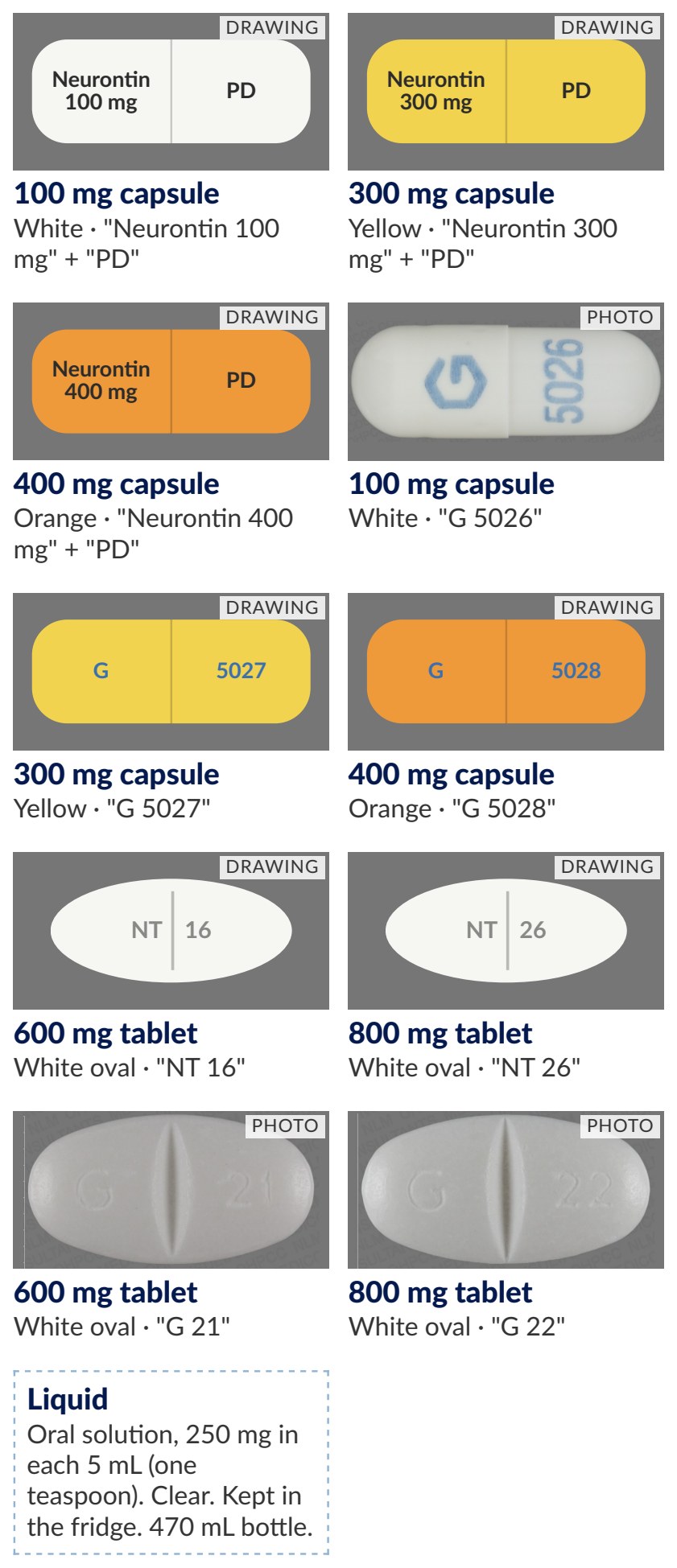
Neurontin capsules say “Neurontin” and the strength on one half and “PD” on the other. Capsules made since 2025 say “VLE” instead of “PD”. Greenstone gabapentin sold from 2004 to 2025 often looks exactly like Neurontin. Neurontin tablets say “NT 16” (600 mg) or “NT 26” (800 mg). Greenstone tablets say “G 21” or “G 22”, and Greenstone capsules say “G” with 5026, 5027 or 5028.
Pregabalin (Lyrica)
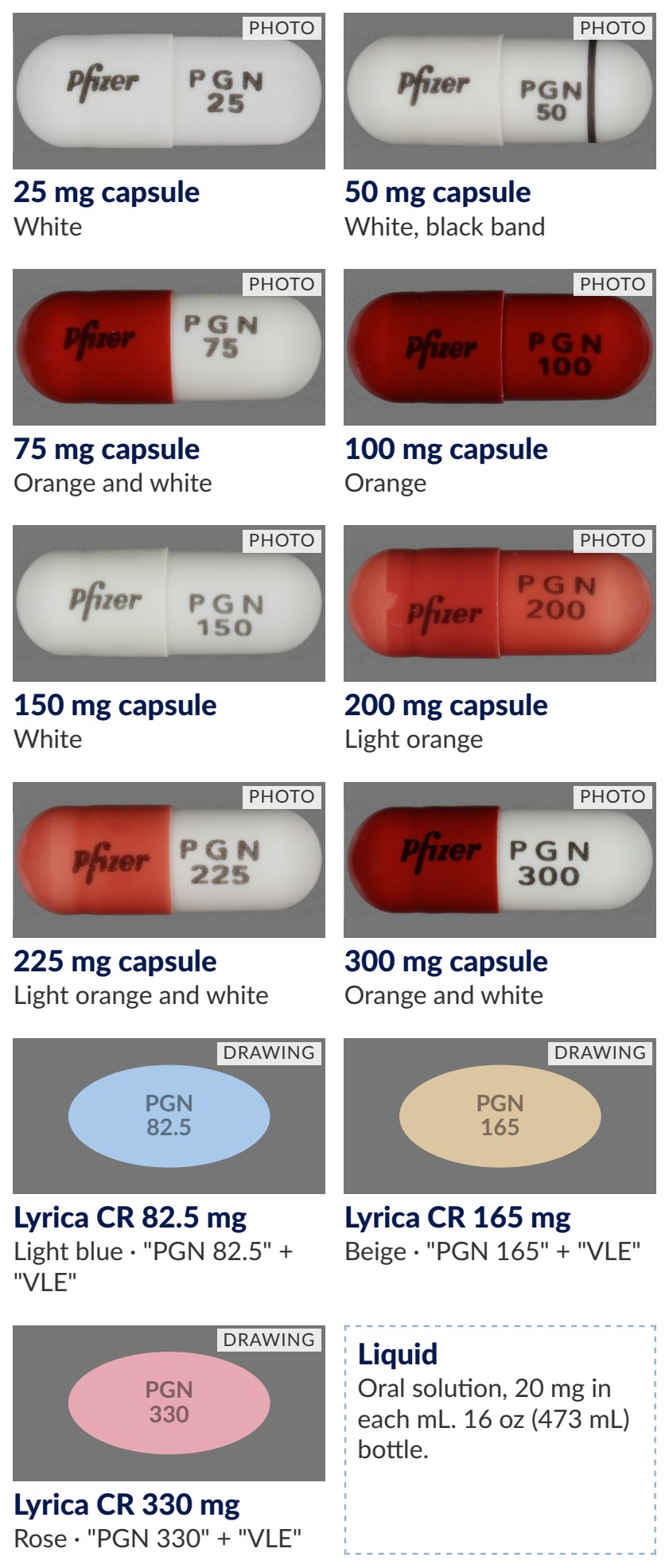
Lyrica and Greenstone pregabalin capsules say “Pfizer” on one half and “PGN” with the strength on the other. Lyrica made since late 2024 says “VTRS” instead of “Pfizer”. Lyrica CR tablets say “PGN” with the strength.
No old bottles? That’s OK. Ask your pharmacy for a printout of your prescription history. It lists each fill with the medicine, strength, maker and NDC, often going back many years.
Download the one-page pill guide (PDF)
Print it or share it with a family member. No sign-up or email needed.
If your medicine looks different or came from another maker, you can still request a free case review.
Photos: U.S. National Library of Medicine. Drawings follow the FDA label descriptions, and colors are approximate. This guide is general information, not medical advice. Don’t stop or change any medicine without talking to your doctor.
Why Is This Being Investigated Now?
Research into the potential long-term cognitive effects of these medications continues to develop.
One large 2025 study found that gabapentin use among patients with chronic low back pain was associated with increased diagnoses of dementia and mild cognitive impairment.
The researchers also reported that patients receiving more gabapentin prescriptions experienced higher rates of these diagnoses than patients receiving fewer prescriptions.
Potential legal claims involving gabapentin and pregabalin are still developing.
There have not yet been established settlements or verdicts resolving these potential claims.
That makes careful screening of prescription histories, diagnoses, timing, and other medical factors particularly important.
You Can Start With a Free, Confidential Case Review
If you or someone you love took gabapentin (Neurontin) or pregabalin (Lyrica) and later developed dementia or significant cognitive impairment, find out whether your circumstances may qualify for further legal review.
There is no obligation to move forward simply by contacting us.
Find Out If You May Qualify
CALL 1-800-LAW-FIRM for a FREE CASE REVIEW
Frequently Asked Questions
What is gabapentin?
Gabapentin is a prescription medication approved to treat certain types of seizures and postherpetic neuralgia, a form of nerve pain associated with shingles. It is also frequently prescribed for other conditions, including various types of chronic and nerve-related pain.
What is pregabalin?
Pregabalin is a prescription medication commonly sold under the brand name Lyrica. It is used to treat certain types of nerve pain and seizures and is also prescribed for fibromyalgia.
Why are gabapentin and pregabalin being investigated?
Recent medical research has raised questions about a possible association between the use of gabapentin and subsequent diagnoses of dementia and mild cognitive impairment (MCI). Other research has examined potential cognitive effects associated with pregabalin.
An association found in a study does not establish that these medications caused dementia in any individual patient. The research and potential litigation continue to develop.
Does gabapentin cause dementia?
At this time, it would be premature to say that gabapentin has been proven to cause dementia. Researchers have reported an association between gabapentin use and increased diagnoses of dementia and mild cognitive impairment in certain patient populations.
Whether gabapentin contributed to an individual’s condition requires consideration of their prescription history, medical history, diagnosis, age, other risk factors, and the developing scientific evidence.
What is mild cognitive impairment (MCI)?
Mild cognitive impairment is a condition involving noticeable changes in memory, thinking, or other cognitive abilities that are greater than what would generally be expected with normal aging. Some people with MCI later develop dementia, although an MCI diagnosis does not necessarily mean that dementia will develop.
What symptoms should I look for?
Potential signs of cognitive decline can include worsening memory, difficulty concentrating, confusion, trouble finding words, difficulty completing familiar tasks, problems with judgment, and changes in thinking or behavior.
These symptoms can have many possible causes. Anyone experiencing new or worsening cognitive problems should discuss them with a qualified healthcare professional.
Who may qualify for a gabapentin or pregabalin case review?
Potential claims are still being investigated, and qualification criteria may change as the science and litigation develop.
For gabapentin, cases under review generally involve 6 or more prescriptions filled between 2000 and 2025 for a reason other than shingles nerve pain or seizures, followed by a diagnosis of early-onset dementia or significant cognitive impairment made by a neurologist or other specialist before age 65. A history of traumatic brain injury or schizophrenia, or a positive genetic test for dementia risk, usually means a claim cannot be accepted at this time.
Pregabalin (Lyrica) claims are reviewed separately and may use different criteria.
Contacting 1-800-LAW-FIRM can help determine whether your circumstances warrant further legal review.
Do I need to have been diagnosed with dementia?
Not necessarily. A diagnosis of significant cognitive impairment that affects daily life may also warrant review. For gabapentin claims, the diagnosis generally needs to come from a neurologist or other specialist and to have been made before age 65.
Someone experiencing memory problems without a formal diagnosis should generally speak with their healthcare provider. A legal inquiry is not a substitute for medical evaluation.
Does it matter how many gabapentin prescriptions I received?
It may. Some research has examined whether greater exposure or repeated prescriptions are associated with different levels of risk.
Because prescription frequency could become an important part of evaluating a potential claim, we may ask approximately how many prescriptions you received and how long you took the medication.
For gabapentin, cases under review generally involve 6 or more prescriptions filled between 2000 and 2025. If you are not sure of the number, your pharmacy can usually print your prescription history.
What if I don’t remember how many prescriptions I had?
That’s okay. You don’t need to have every prescription or medical record available before contacting us.
Information may be available through your pharmacy, prescribing physician, insurance records, or medical records. For the initial review, provide as much information as you reasonably remember.
What if I took generic gabapentin instead of Neurontin?
You may still request a case review. Neurontin is a brand name for gabapentin. Our intake team will ask about the specific medication, manufacturer if known, prescription history, and other information that could be relevant to evaluating your potential Gabapentin Dementia Lawsuit.
What if I took Lyrica?
Lyrica is a brand name for pregabalin. If you took Lyrica or generic pregabalin and were subsequently diagnosed with dementia, MCI, or another significant cognitive condition, you may want to have your circumstances reviewed.
What if gabapentin was prescribed for something other than its FDA-approved uses?
That information may be relevant. Gabapentin is frequently prescribed off-label, meaning for a condition or use that has not specifically been approved by the FDA.
Off-label prescribing is legal and common in medical practice. An off-label prescription by itself does not establish wrongdoing or mean that a patient has a legal claim.
For gabapentin claims under review, the reason for the prescription matters. Cases generally involve gabapentin prescribed for something other than nerve pain from shingles (postherpetic neuralgia) or seizures, such as back pain, other nerve pain, anxiety or sleep problems.
Can a family member contact you for someone with dementia?
Yes. A spouse, adult child, caregiver, or other family member can contact 1-800-LAW-FIRM to begin an initial inquiry for a loved one who may no longer be able to manage the process independently.
Additional information may eventually be required to determine who has legal authority to act on that person’s behalf.
Is there already a gabapentin class action or settlement?
Potential litigation involving gabapentin, pregabalin, and cognitive impairment is still developing. A legal review today should not be interpreted as a representation that a settlement, compensation program, or recovery has been established.
Our team can evaluate the information you provide based on the current status of the potential litigation.
How much is a gabapentin dementia case worth?
It is too early to responsibly estimate the value of an individual potential claim. Case value can depend on many factors, including the nature and severity of the injury, medical history, medication exposure, supporting scientific evidence, applicable law, and how the litigation develops.
How much does it cost to find out if I may qualify?
There is no charge for the initial case review. Contacting 1-800-LAW-FIRM does not obligate you to pursue a claim or create an attorney-client relationship.
How do I find out if I may have a claim?
Call 1-800-LAW-FIRM or complete our short online form. We’ll ask several questions about the medication you took, how long you took it, your diagnosis, your age at diagnosis, and your medical history.
It only takes a few minutes to start the review.